14/ 04 / 24 – Eddi Weinwurm
Symbiotic Intelligence: The Future Where Humans and AI Unite
Transforming Fiction into Function: The Technology That Will Change the World
In my last article, I took an honest look into AI, identifying its obvious dangers and benefits. The simple conclusion was that AI is not inherently good or bad; its impact depends on how it is utilized.
One topic that received a lot of feedback and questions was the idea of personal AI symbiosis — machines enhancing us individually. Let’s take a closer look at this seemingly utopian scenario!

The Vision of Human-Machine Symbiosis
Considering human-machine symbiosis, yes, it sounds utopian. What could it look like? We don’t have to be sci-fi writers to explore this topic; let’s instead approach it from a logical standpoint by breaking it down into its essential components!
We can reduce every machine symbiosis into a simple input-output model:
Perception (Input):
We get data from AI. It can give us filtered, moderated, and summarized information, helping us better understand our surroundings — our private and professional social environments, politics, health, science, etc. The machine would collect, analyze, simplify, and explain data. In other words, we could receive AI-curated information about everything. AI would preprocess data and present it in a conclusive, accessible, and understandable way.
Action (Output):
We want to do something? AI can do it for us. It could help us act in our best interest. It could support us in our jobs (to keep them, even if competing with others’ AIs) and help us in our personal lives, whether deciding what to do next weekend or making serious decisions about health, wealth, and our future. The machine would act based on our reaction to this data in a way that it thinks we want, trying to understand our intentions and act accordingly.
We, In Between:
Science Fiction or Reality?
How Could This Evolve in the Future? (Steps On The Way To Symbiotic Intelligence)
Perception Enhancement:
Action Enhancement:
The Future of Symbiotic Intelligence User Interfaces (The I without the A)
Symbiotic Intelligence — Micro-Transactions
Continuous Perception Enhancement
Continuous Action Enhancement
The Flow of Micro-Transactions
Summarizing It
- Reverse the concept of objectification or even personification of machines; instead, be invisible, a non-object.
- Avoid discrete transactional interactions; instead, be in a constant flow of micro-transactions.
- Enhance perception through subtle, context-aware modifications without disrupting the user’s sense of reality.
- Anticipate user intentions, executing actions autonomously while ensuring alignment with user preferences and goals.

Excursus: It Doesn’t Have to Be Dystopian
Bonus: Symbiotic Intelligence, Principles For Product Design
- Invisibility and Seamlessness: Symbiotic intelligence should reverse the concept of objectifying or even personifying machines. Instead, these systems need to be invisible and non-obtrusive, seamlessly integrating into the user’s environment without drawing attention to themselves. This design principle ensures that the technology supports users without them consciously interacting with it.
- Continuous Micro-Transactions: Unlike traditional AI systems that rely on discrete transactional interactions, symbiotic intelligence should operate in a constant flow of micro-transactions. This means continuously processing and responding to user needs in real-time, creating the most uninterrupted and fluid user experience possible.
- Context-Aware Perception Enhancement: The systems should subtly enhance the user’s perception through context-aware modifications. By providing timely and relevant information without disrupting the user’s sense of reality, these enhancements should feel like a natural extension of the user’s own cognitive processes.
- Autonomous Action Anticipation: Symbiotic intelligence should anticipate user intentions and execute actions autonomously as much as technically possible. This involves understanding the user’s goals and preferences, and aligning its actions accordingly to support those objectives without requiring as little explicit commands as possible. Ultimately, the aim of symbiotic intelligence is to become an invisible yet invaluable part of our lives, enhancing our abilities and enriching our experiences without feeling intrusive or artificial.
Further Readings And Other Views
Human + Machine: Reimagining Work in the Age of AI by Paul R. Daugherty and H. James Wilson
The Age of Em by Robin Hanson
The Fourth Industrial Revolution by Klaus Schwab
Life 3.0: Being Human in the Age of Artificial Intelligence by Max Tegmark
Superintelligence: Paths, Dangers, Strategies by Nick Bostrom
The Master Algorithm: How the Quest for the Ultimate Learning Machine Will Remake Our World by Pedro Domingos
Augmented: Life in the Smart Lane by Brett King
Architects of Intelligence: The Truth About AI from the People Building It by Martin Ford
Future Presence: How Virtual Reality Is Changing Human Connection, Intimacy, and the Limits of Ordinary Life by Peter Rubin
Human-AI Symbiosis: A Survey of Current Approaches by Mohammadreza Mousavi et al. arXiv
The Coming Age of Calm Technology by Mark Weiser and John Seely Brown Calm Technology
Ambient intelligence will accelerate advancements in general AI by Rohit Prasad Amazon Science — Ambient intelligence never took of, maybe symbiotic intelligence will
Discover More

Semantic Search is a Disaster When Scaling
Why CaraOne’s results are so much better than other products, when scaling big

LLMS: Start to Think Small
Why Huge LLMs Aren’t the Solution for Everything
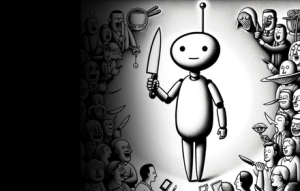
AI: Enhancer or Destroyer?
How Artificial Intelligence Could Shape Our Future: Let’s Be Honest and Face the Threats
Discover More